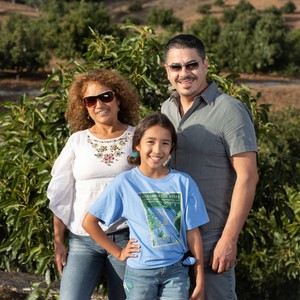
What does it mean to grow up Latino in small-town New Mexico? Author Celia Pérez recognizes that the experience may differ from commonly-held assumptions. In her novel Tumble, Pérez introduces readers to a young girl who learns interesting details about her family after her stepfather announces he would like to adopt her. Pérez uses details from her own childhood, like her love for wrestling, to write a story that portrays a multidimensional community. Listen to learn more about Tumble and how the author encourages readers to think about what it means to discover one’s own identity.
Read More
Jacqueline Woodson’s free verse memoir, Brown Girl Dreaming, won the National Book Award in 2014. Woodson has published 30 books and won three Newbery Honor Medals. This book explores different perspectives in a desegregating America. In this interview, Woodson talks about her experience of segregation of race and religion, and how her experiences are often similar to students who she talks with today. She talks about the need for more diverse literature in schools, along with her book being appropriate for a wider audience-- not only brown students. Listen to hear her discuss how she integrates her personal experiences into her writing.
Read More
As Europe struggles to keep up with the thousands of migrants seeking asylum, there is one group of migrants that is often overlooked - children. Many travel alone, fleeing violence and poverty in Syria, Afghanistan, Eritrea and other nations. In Germany, as many as 1,000 migrants a day apply for asylum. One weekend almost 200 unaccompanied minors applied for status in Germany. Many children are traumatized and should receive special housing and treatment, but the numbers are overwhelming authorities. Listen to learn how Europe is addressing the growing problem of unaccompanied minors seeking asylum.
Read More
Firstborn children often have an advantage over their younger siblings. They get more attention from their parents because they are alone for the first months or years of their lives. But are they more successful? A new research study finds that firstborn sons are more likely to become CEOs. The research on birth order is interesting since some things can influence a person’s behavior, but a person’s fate is not determined solely by birth order. Listen to hear more about what this research study found and then debate: Does birth order matter?
Read More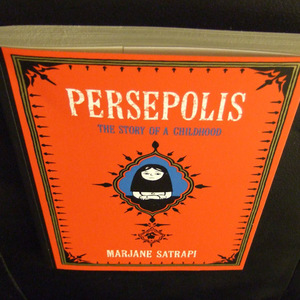
Author Marjane Satrapi created the graphic novel Persepolis—later adapted as a movie—about her experience growing up during the 1979 Islamic revolution in Iran. Satrapi was a rebellious teenager, fighting to maintain her beliefs and individuality while living under a government that dictated how its people should live—for example, mandating that women must wear veils. Listen to hear about the Iranian government’s reaction to the movie and how others reacted to it.
Read More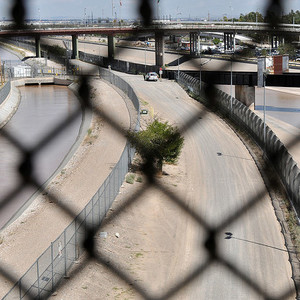
While some migrant children travel to the United States with their families, others arrive on their own to be reunified with family members they have not seen in a long time. Such family reunifications may bring happiness, but they can present challenges as well. Listen to learn about the experience of two girls from El Salvador who came to live with their mother in Virginia after not seeing her for ten years.
Read More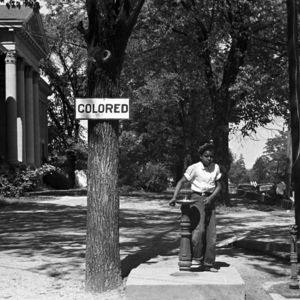
In Jerry Spinelli’s Maniac Magee, a twelve-year-old orphan runs away in search of a home and finds himself in a small Pennsylvania town segregated by race. There, the mysterious stranger, who earns the nickname “Maniac” for his legendary athletic feats, confronts prejudice and breaks down racial barriers. Listen to hear a fifth grade book club discuss how the lessons of Maniac Magee could be applied to their own communities.
Read More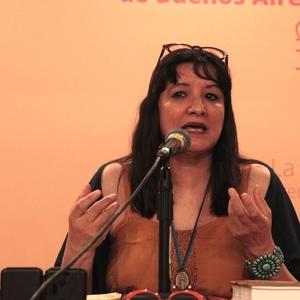
Sandra Cisneros writes about working class Latino life in America and has won many awards for her writing. She is best known for her book, The House on Mango Street. The themes in her writing include the meaning of home, belonging, crossing boundaries and cultural expectations of women. Her new memoir, A House of my Own, describes how her own life also reflects these themes. In this interview, she talks about being connected to Mexico and to the United States, and how she hopes to be an ambassador passing between the two cultures. Furthermore, she works to honor the women in her family while also being an independent woman and breaking some cultural traditions. Listen to hear more about how Sandra Cisneros has created a house of her own.
Read More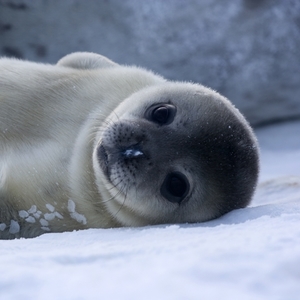
Weddell seals are not only adorable, but they can tell scientists a lot about how climate change and conservation efforts are affecting the planet. Over the years, Weddell seal researchers have refined their research methods to better explore their hypotheses about the Weddell seal population. Listen to hear how and why scientists are counting Weddell seals, and why they invited people around the world to join the project from their own homes.
Read More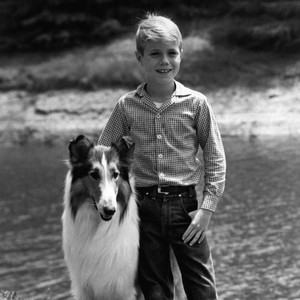
From "Shiloh" to "Lassie" and "Old Yeller," young adult literature is full of stories about friendship between people and dogs. People love animals but what do animals feel? There is a debate in the scientific community and in popular culture about what emotions animals are capable of and how they display these emotions. Does recognizing that animals can feel take away from human emotion? Or does it help us recognize where these traits came from? This story discusses recent research on the emotions of animals. Listen to learn more about what researchers discovered, and the controversy surrounding the emotional lives of animals.
Read More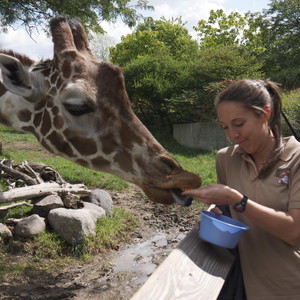
What happens to the animals when no one visits the zoo? Though the coronavirus pandemic has shut down many public gathering places and cultural institutions, including zoos, the animals continue to need daily care and feeding. Places like The Cincinnati Zoo depend on a small group of dedicated workers to show up each day to care for their beloved animals. Listen to hear zoo workers describe some of their favorite animals and learn how one baby hippo became an internet star.
Read More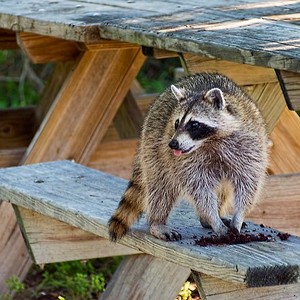
One of the newest trends in coffee shops is welcoming animals. The way these cafes work is that people pay to enter and get a free drink. People who don’t have time or room for a pet can come and spend time with animals, without having to own them. Most people come to pet the cats, rabbits, sheep, or owls in the cafe. But some cafes might be going too far. In South Korea, one cafe welcomes raccoons, a typically wild animal that can be dangerous. Listen to hear about a visit to this cafe and then debate: Should animals be allowed in cafes?
Read More
Jane Goodall is a well known advocate for ecological preservation. Her book "Hope for Animals and Their World" is about her experiences rescuing endangered animal species all over the world. She makes the case for not only saving animals like chimpanzees, but for preventing rare plants and insects from dying out, because it’s vital for sustainability and the proliferation of all kinds of life. Listen to learn more about her experiences with species near extinction and preserving entire ecosystems on our planet.
Read More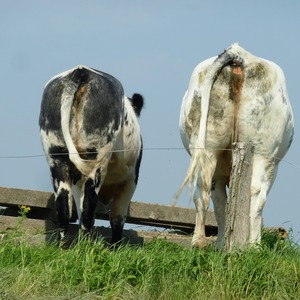
A visitor to rural Botswana might notice an odd sight: eyes painted on the rear ends of cows. It all began when farmers started complaining that predators, including lions and leopards, were killing their cows, which has contributed to the endangerment of the cats. Enter two Australian biologists with an unusual idea: painting eyes on the rumps of cows to confuse the predator cats. Listen to hear the scientists explain more about their novel idea and how well it worked.
Read More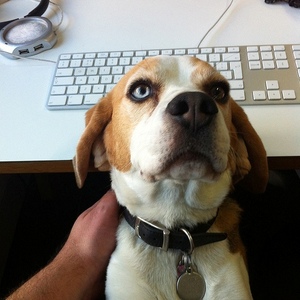
The U.S. Capitol is a very dog-friendly workplace and lawmakers have been bringing their dogs to the Capitol since the 1800s. They used to sit at Congressmen’s feet in the Senate Chamber and roam the hallways with their owners. There are occasions when the dogs fight with each other, but mostly they are a friendly face in the lawmakers’ workplace. Listen to hear more about these dogs and their long history in the Capitol.
Read More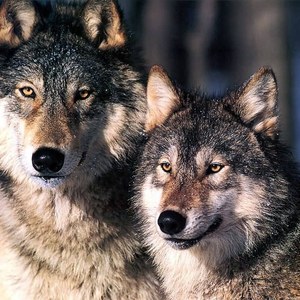
The relationship between humans and dogs is a special one, and there are multiple theories about how it originated and how it has changed over time. All dogs evolved from wolves, and scientists are learning more about that evolutionary process through research about similarities and differences in the behavior of wolves and dogs. Listen to this story about a game of fetch and how it might inform scientists’ understanding of the history of the special relationship between species.
Read More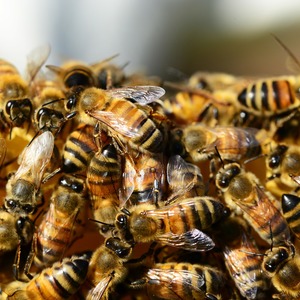
Bees are an important part of the planet’s ecosystem. They help to create food for humans and other creatures by pollinating plants. World Bee Day was established to celebrate the contributions of these small but mighty insects, and to raise awareness about the threats that are causing their populations to decline. Listen to learn more about the importance of bees, why they are at risk, and how one TikTok star is helping to save them.
Read More
Ever since an IBM computer defeated a world-class chess champion, people have been fascinated by competitions pitting humans against computers. A recent example involves a popular racing game called Gran Turismo Sport. In this video game, cars driven by artificial intelligence (AI) demonstrate a remarkable ability to learn quickly enough to beat some of the world’s most experienced human gamers. Listen to hear how AI drivers beat their human counterparts and what might be learned from the outcome.
Read More
The artificial intelligence tool ChatGPT is getting smarter. OpenAI, the company that developed the chatbot, recently announced that the tool can pass AP exams and describe images in detail, for example. When a reporter tested ChatGPT, however, he discovered some problems, including significant accuracy issues. Listen to hear about the benefits and limitations of ChatGPT and what experts caution about using it.
Read More
People who are missing an arm may use a high-tech artificial limb to help them with everyday activities such as eating or writing. These prosthetic limbs are very expensive, however, which means that it does not always make sense to use them for activities such as biking or playing baseball. To address this issue, a medical center is 3D printing custom prostheses that are much less expensive. Listen to hear how 3D printing is helping people, especially kids, fully participate in sports and other daily activities.
Read More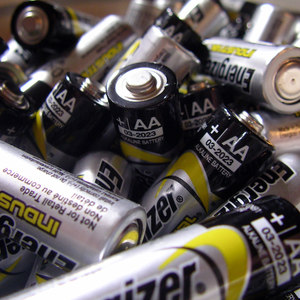
People rely on batteries to power our technology: laptops and phones run on rechargeable batteries. These can leak and are full of chemicals. But over time, these batteries stop re-charging, forcing us to purchase a new battery. But what if our batteries never died? A new battery was recently created that can last over 100 times longer than typical batteries. Listen to this story to hear how one college student has engineered a new battery.
Read More
Concerns about national security and electronic privacy are growing following a leak of documents on WikiLeaks. The documents show how the CIA uses technology to gather intelligence from companies and individuals. This development is damaging to the CIA, because it reveals its use of surveillance, while also highlighting vulnerabilities in its technology systems. Companies will now be able to close gaps in their security, making it harder for the CIA to gather intelligence from them. At the same time, some people are worried about groups who can use this information to launch an attack against the CIA. Listen to learn more these leaks.
Read More
Charities are beginning to use virtual reality as a way to make donors feel more empathetic to a cause and potentially increase the amount they might donate. Several charities have created virtual reality experiences designed to put ordinary people in the place of others who are suffering. The hope is that virtual reality will make these unfamiliar experiences more concrete, and therefore, make people feel more empathetic. Listen to learn more about the virtual reality experiences being developed and then debate whether you think virtual reality can make you more empathetic.
Read More
If Uber and other transportation technology companies have their way, people who use ride-hailing apps will soon be able to order flying taxis. These futuristic vehicles would quickly transport passengers from location to location, traveling high above traffic on the ground. Listen to find out how and when the dream of flying cars may become a reality, and what issues need to be considered before then.
Read More
Self-driving cars have been getting a lot of attention lately, with companies such as Uber, Tesla and Google trying out their autonomous vehicles on city streets. However, the big shift towards self-driving vehicles may not be with fancy electric cars, but with long-haul trucks. Trucks are well-suited for self-driving technology and will make the job of driving less dangerous. Listen to hear why people are predicting that trucks will undergo the shift earlier than cars.
Read More
Many children, teens, and adults spend a lot of time looking at screens. Whether it’s an addiction or merely troubling behavior, too much screen time can interfere with other activities, create changes in your mood, and cause other problems. A former executive from Google was so concerned about the public health risks of too much screen time, he started a company that tries to inform people about how addictive technology can be. Listen to learn how companies are responding to the growing concerns about too much technology.
Read More
Narratives imagined by children are often delightfully unbounded by adult conventions and logic. In this audio interview, a 6-year-old author and 13-year-old illustrator describe how they imagined and created an unusual picture book about some chickens who leave their farm to become pirates. Their parents, who collaborated on the project, compare their children’s creative processes to their own and analyze how observing and helping their children changed their own ideas about creativity. Listen to hear about a multi-generational collaboration that transformed one young child’s imaginative tale into an actual book.
Read More
A Wrinkle in Time, a famous novel by Madeleine L’Engle, is the story of teenager Meg Murry. Meg is transported on an adventure through time and space with her younger brother and friend as they try to rescue her father. When it was originally published in 1963, no publisher knew how to promote it. What is it about A Wrinkle in Time, and why is it so controversial 50 years after its publication?
Read More
The famous ring featured in J.R.R. Tolkien’s “The Hobbit” and “The Lord of the Rings” may have actually existed. This story reveals how Tolkien encountered a supposedly cursed ring from the Roman period shortly before he wrote “The Hobbit.” Many believe that this ring and the details surrounding it might have inspired Tolkien’s novels. Today, the ring is on public display at an English estate. Listen to learn more about the fascinating connections between history, archaeology and J.R.R. Tolkien’s beloved fantasy series.
Read More
Filmmakers often make movies based on popular and beloved books, prompting audiences to wonder whether to read the book or watch the movie first. The argument has been made that movie adaptations can broaden the audience for books, especially older classics. Another view is that people who see the movie version of a book first will miss out on the benefit of fully engaging their imaginations while reading. Listen to hear a discussion about popular books and movies that raises points on both sides and then debate: Should you read the book before you watch the movie?
Read More
Since ancient times, people around the world have used fairy tales, fables, and folktales to capture the imagination of and entertain an audience. However, these tales were meant to do more than entertain: they were used to teach morals. Fairy tales, fables, and folktales share other elements, such as talking animals, mythical creatures, and/or inanimate objects that think or feel emotions. Such tales are still being written and enjoyed today. Listen to hear how a professional writer transformed one boy’s story idea into a fantastic fable, complete with three edible houses and one hungry wolf.
Read More
A series of young-adult novels called Percy Jackson and the Olympians by Rick Riordan has struck a chord with millions of readers. In the novels, Percy goes to Camp Half-Blood to train with other demigods (the children of gods and humans). He then goes on various adventures involving Greek mythology mixed in with the modern world. Recently, independent bookstores have been running day camps for children, inspired by the fictional camp from Riordan’s novels. Listen to hear about how an actual Camp Half-Blood harnesses Greek mythology to create learning experiences for kids, and about Greek mythology’s continued appeal today.
Read More
Two photographers in Atlanta have undertaken an unusual project: turning kids into real-life versions of their wildest dreams. Whether it’s a creature from a fairy tale or an ancient prince, kids are invited to imagine who or what they might like to become, and to express their personalities in creative ways in front of the camera. Listen to hear the reactions of kids who have participated in an imaginative photo shoot, and find out what the photographers hope to accomplish through their project.
Read More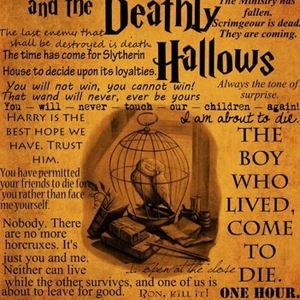
Harry Potter is a popular series of fantasy novels written by British author J.K. Rowling. The novels chronicle the life of a young wizard as he makes his way through magical schooling, forming friendships and fighting supernatural enemies. The title character, Harry Potter, has a tremendous impact on the wizarding world. It turns out that the boy wizard may also have an effect on the real world. According to a recent study, reading Harry Potter books could influence readers’ empathy and attitudes. Listen to find out how J.K. Rowling’s work might make a real difference to readers.
Read More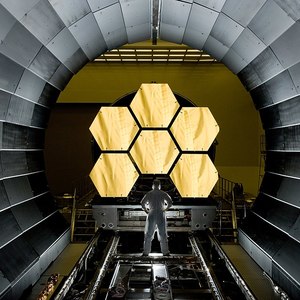
Recently NASA launched a large, powerful telescope into space, where scientists hope it will help them learn more about the origins of the universe. The James Webb Space Telescope is designed to study invisible light waves, which will allow scientists to see into the past. Launching this giant telescope into space presented scientists with some challenges—beginning with how to fit it into the rocket. This audio story explores how engineers solved that problem and what makes this massive telescope so powerful.
Read More
After living in space for almost a year, NASA astronaut Scott Kelly returned safely to Earth. Kelly stayed aboard the International Space Station, conducting experiments and taking photographs of Earth. Throughout the year, he was able to communicate with people at NASA and update them on his activities and status. Researchers at NASA have also tracked Kelly’s physical and mental health after one of the longest missions in space. Listen to the story to hear more about this astronaut’s admirable and historic journey.
Read More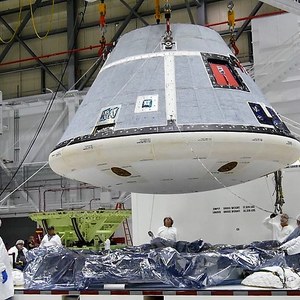
The U.S. space program has big plans for 2020. Two private companies are preparing to send astronauts into space, which has not been done since 2011. A rover mission to Mars is planned, this time with a special instrument to pull oxygen from the Martian atmosphere. And hundreds of small satellites will be launched into orbit, providing global internet coverage. Listen to learn more about the space program’s ambitious goals and the challenges it faces.
Read More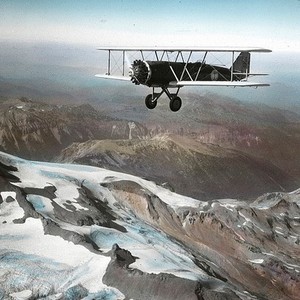
Amelia Earhart attempted to become the first female airplane pilot to circumnavigate the globe. Her plane disappeared during her flight 80 years ago. Although human remains believed to be Earhart’s have been found on an island off of Hawaii, the wreckage of her airplane has never been discovered. Now, the Group for Historic Aircraft Recovery is using new technology to map the ocean floor off the island and search the area for parts of the plane. Listen to learn more about the search expedition and Amelia Earhart’s legacy.
Read More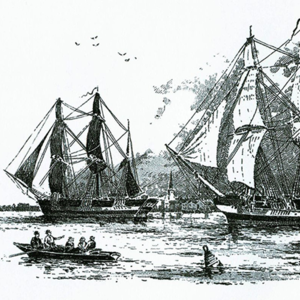
In 1845 two ships led by Sir John Franklin left England searching for a northern route across the globe, known as the Northwest Passage. They never returned. 169 years later, a helicopter pilot found a clue that led the Canadian government to one of the missing ships. From sonar imaging to video cameras on submarines, archaeologists have confirmed that this is one of the abandoned ships from the famous expedition. Listen to hear about the haunting story this discovery has unearthed.
Read More
The American space program’s early success was due in large part to a group of African American women known as “human computers.” They were brilliant mathematicians but were made to use segregated offices, bathrooms, and equipment. One such overlooked mathematician was Katherine Johnson, who developed trajectory equations for getting a spacecraft into orbit. Listen to hear more about Johnson and learn why the impact of African American women at NASA was unknown for years.
Read More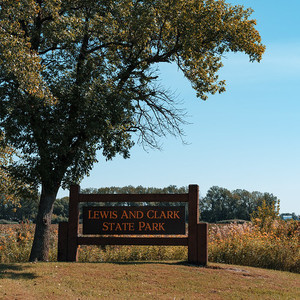
From 1804 to 1806, Meriwether Lewis and William Clark led an expedition to explore North America beyond the Mississippi River. Their expedition, pushed by Thomas Jefferson and approved by Congress, was motivated by a combination of geopolitics and scientific curiosity. Their journey west and return to St. Louis is a remarkable and profound American story of sacrifice, discovery, conquest, and adventure. This audio story centers around the 200 year anniversary of their expedition. In the story, the details of the journey, its participants, and its historical legacy, both good and bad, are addressed.
Read More
On New Year’s Day, a NASA (National Aeronautics and Space Administration) spacecraft made history by encountering the most distant object ever visited, over 4 billion miles away. The piano-sized spacecraft has already transmitted images of an icy rock known as Ultima Thule, which scientists believe to be a pristine vestige of the early days of our solar system. Listen to this interview with a planetary scientist to learn why this event is so exciting and how the mission may further our understanding of our solar system’s origins.
Read More
NASA astronaut Peggy Whitson has just broken the record for the most days spent in space. She has been off planet Earth longer than any other American in history. Whitson is also the first woman to command the International Space Station. President Donald Trump congratulated her in a call to the Space Station and she sent a message to young people. Listen to learn more about Whitson and her historic record.
Read More
What’s one overlooked way to build reading comprehension in middle and high schoolers? Listening to complex ‘texts’! Listening comprehension is fundamental to literacy.
Try this free listening challenge!
© Copyright 2026 Listenwise. All Rights reserved.